« BACK TO BLOG
Market Intel, Forecasts & Strategies
Commit, Commit: What a Fighter Pilot Teaches Commercial Real Estate Professionals About Fear and Resilience
Commercial real estate has a way of firing missiles at the people who work in it. A tenant in a single tenant building calls to say they are leaving unless the rent is cut in half. A Class B or C office building sits half empty in a market with more space than demand. Interest rates move, a lender tightens terms, and a deal that looked certain in the spring falls apart by the fall. Nobody in this business avoids those moments, so the real question is how well we are prepared to handle them.
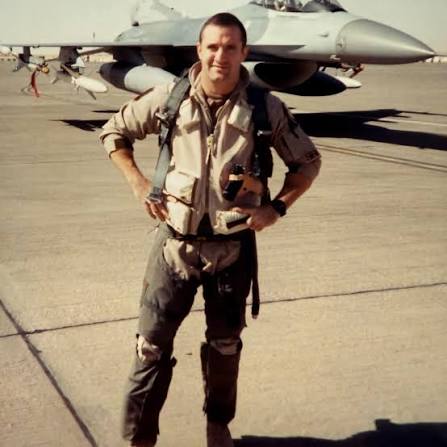
To explore how professionals in high-pressure roles manage fear and keep performing, I recently welcomed Lieutenant Colonel Rob “Waldo” Waldman, retired U.S. Air Force F-16 fighter pilot, founder of Wingman Enterprises, and author of the New York Times bestseller Never Fly Solo, to America’s Commercial Real Estate Show. Waldo flew 65 combat missions, and he did it while managing claustrophobia and panic attacks. His new book, Commit, Commit!, takes its name from the radio call pilots make when there is no turning back.
For brokers, owners, and investors, his lessons translate almost directly to listing presentations, tenant negotiations, and the long stretches of a career when the market is not cooperating.
A Fighter Pilot’s Hidden Battle With Fear
About a year and a half into his flying career, Waldo went scuba diving in the Caribbean, rushed through the briefing, and had his mask malfunction underwater. He inhaled a lung full of salt water and had a full panic attack. A few days later, flying through bad weather at 33,000 feet, the same panic came back in the cockpit. For roughly the next 10 years of an 11-year active duty career, he flew while learning to manage it.
What struck me is that he never describes the answer as becoming fearless. He calls fearlessness “a cheesy word.” His approach was to subjugate fear to something more important: his student, his wingman, and the mission. When others depend on you, the focus shifts away from your own anxiety and toward the job in front of you. In commercial real estate, our investors, lenders, clients, and teammates are counting on us in much the same way.
Preparation Leads to Confidence, Not Perfection
Waldo’s first rule is that wingmen never wing it. You do not prepare for certainty. You prepare for the uncertain, and you build a plan for each contingency before it arrives.
- Chair Flying: Fighter pilots rehearse every radio call, missile launch, and emergency in a simulator cockpit, first alone and then in front of experienced pilots and peers who throw problems at them. A little embarrassment in practice prevents a much bigger one in combat.
- Practice Under Pressure: Rehearsing in front of a mirror produces false confidence because the mirror never raises an objection. Real readiness comes from being challenged by people who know the work.
- Honest Answers: “I don’t know, I’ll find out and get back to you tomorrow” is a perfectly good response. Clients do not expect perfection, and they can tell quickly when someone is bluffing.
We run a 10-week training program for our brokers at Bull Realty, and this is one of its core exercises. Each broker delivers a presentation and handles objections in front of the whole group. If you cannot do it in front of your colleagues, you are not ready to do it in front of an owner deciding who will sell their property.
Never Fly Solo: Check Six and Mutual Support
In a single seat F-16, the pilot cannot see the most vulnerable position, directly behind the aircraft. The wingman flying alongside can. That is the idea behind “check six,” and it sits at the center of Never Fly Solo: if I have your back and you have mine, both of us see more of the threat than either could alone.
Waldo’s advice is to build those relationships before the missiles come. Show up to association meetings, volunteer in the industry, and give value before you need anything in return. When the pressure arrives, be transparent enough to ask for help. As he put it, “Mayday, Mayday” and “I need help” are perfectly good calls to make.
He also pushes back on a relationship culture that avoids hard conversations. Caring about someone means telling them what they need to hear, delivered with tact. In his words, you need to be a rubber mallet, not a pitchfork.
Losing the Battle to Win the War
One point that lands squarely in brokerage is Waldo’s advice to sometimes lose the battle to win the war. That might mean trimming a margin, accepting a smaller engagement, or giving ground in a negotiation to protect a relationship that matters over the long run.
We do this regularly as brokers. We will take an assignment that is honestly too small for our team because we value the relationship, and then we work it as hard as we would a much larger deal. Waldo’s point for newer brokers is the same: prove your worth on base hits before swinging for home runs, because how you handle the small engagements determines whether you will be trusted with the large ones.
Resilience: Grit, Scars, and the Courage Loop
Waldo learned to handle rejection early. The Air Force Academy had a 33% washout rate, and every stage after it, from pilot training to F-16 training, brought more attrition. Pilots earn their wings on every mission. That repeated exposure built what he calls a grit muscle.
- Look Back to Leap Forward: The embarrassing moments, the failed pitches, and the scars of character that clients never see become fuel for the next challenge. I sang in a band for a while and bombed the first time I spoke in front of a big crowd, and both experiences made the next performance easier.
- Envision the Win: Waldo spent years imagining everything that could go wrong. The change came when he started picturing the mission going well and then doing the work to make it real.
- Commit Before Clarity: Courage follows commitment. Waiting for the fear to dissipate before acting means waiting forever.
- Bet on You: Listen to naysayers for the truth in what they say, then get around the “courage mongers” rather than the fear mongers, and do the work to earn your wings.
Final Thoughts: Train Like the Top Guns
The point I keep coming back to is training. Elite athletes, performers, and fighter pilots never stop practicing, yet many commercial real estate professionals reach a certain level and stop investing in coaching. With AI and market volatility reshaping how this business works, the fundamentals of work ethic, integrity, and attention to detail stay the same, but the tools and tactics keep changing.
Waldo’s closing advice is to know your why before you fly, write down the goal, and surround yourself with people who sharpen you. His father told him to be careful who he spends time with on the weekends, and Waldo turned that into a simple rule: make your friends your mentors and your mentors your friends. In a market that keeps throwing missiles, that may be the most practical advice of all.
Have a Commercial Real Estate Strategy to Discuss?
With more than $8 billion in closed commercial real estate transactions, Michael Bull, CCIM, brings extensive transaction and market expertise to owners, investors, and companies. As host of America’s Commercial Real Estate Show and an active broker with a strong presence in Atlanta and throughout the Southeast, Michael is available to discuss property strategies, market conditions, acquisitions, dispositions, and other commercial real estate endeavors.
Michael Bull, CCIM
Michael@BullRealty.com
404-876-1640 x 101