« BACK TO BLOG
Market Intel, Forecasts & Strategies
Office Market Outlook 2026: Trends, Risks & Opportunities in Commercial Real Estate
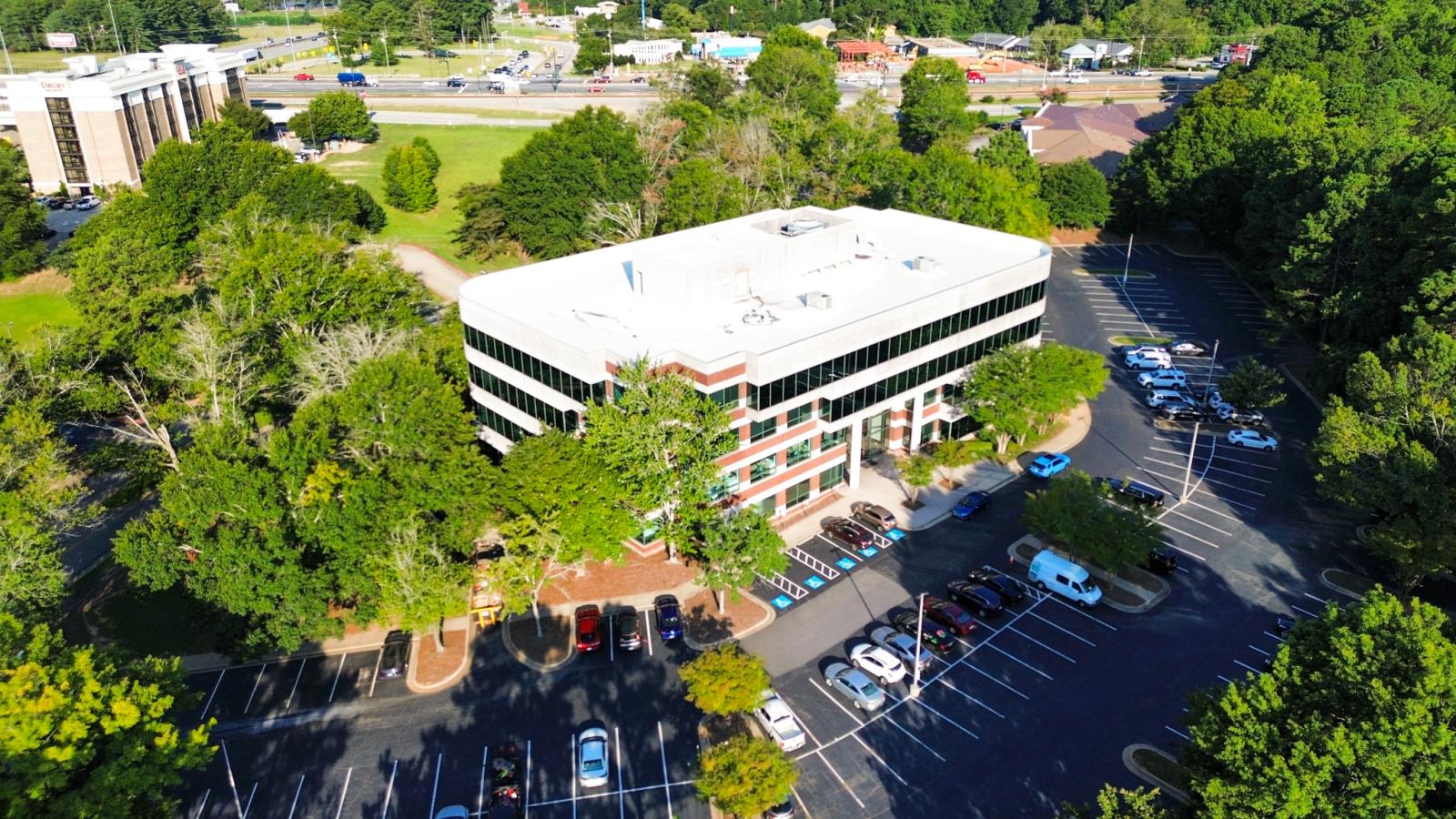
Michael Bull, CCIM and Austin Bull recently closed the sale of a ±81,000 SF Office Building with a cap rate of 9%.
-
-
Office Market Outlook 2026: Trends, Risks & Opportunities in Commercial Real Estate
The U.S. office market has been under a microscope since the pandemic. Rising interest rates, hybrid work trends, declining valuations, and elevated vacancy rates have prompted investors, lenders, landlords, and advisors to question the sector’s future. But data suggests the narrative is shifting—and faster than many expected.
On a recent episode of America’s Commercial Real Estate Show, Michael Bull sat down with Michael Mandel, CEO and co-founder of Comstack, and Ali Bowman, the company’s Director of Real Estate Intelligence, to uncover what the latest leasing, vacancy, pricing, and construction data reveals about the office market heading into 2026.
The insights offer a clearer—and surprisingly optimistic—picture of what’s ahead.
Vacancy Rates Remain High—But Show Signs of Stability
Office vacancy remains elevated nationwide, hovering near 19% among institutional-grade assets based on NCREIF data. While still at record highs post-COVID, signs of stabilization are emerging.
A key shift: sublease vacancy is finally shrinking. Five years after companies initially flooded the market with excess space, many of those sublease terms have expired or been re-leased. Although overall availability remains sizable, the decreasing sublease inventory suggests absorption is underway.
Vacancy trens still vary dramatically by asset class—with Class A and trophy properties outperforming older, unrenovated buildings.
Flight to Quality Isn’t Going Away
The office market continues to reward well-located, modernized, amenitized buildings—especially those built or upgraded within the past 10 years.
Tenants seeking to motivate office attendance want hospitality-driven environments, energy-efficient systems, collaborative spaces, and Class A locations near transit, dining, and housing.
However, Bowman notes an important new development:
Renovated Class B buildings—especially B+ assets—are beginning to gain traction, particularly in markets where Class A space is limited or priced at a premium.
This signals a potential broadening of demand and a positive step toward market normalization.
Are Office Rents Recovering? It Depends on the Market
Comstack’s Gateway Office Market Rent Index shows rents are beginning to climb again after plateauing for much of the past year. But performance remains highly localized.
Markets showing notable rent recovery:
- New York City
- Dallas
- Boston
- Chicago
Markets still lagging:
- Washington, D.C.
- Atlanta
- San Francisco (depending on submarket)
Effective rents—those adjusted for concessions like tenant improvement allowances and free rent—tell the real story. Some markets are back to or above 2019 levels, while others continue to trail.
Construction Slowdown May Become Office Market’s Biggest Tailwind
New office development has slowed dramatically, driven by:
- Higher construction and borrowing costs
- Tariffs increasing material prices
- Tighter lender requirements
- Investor caution
- Higher vacancy
- Interest rates
Recent research suggests the U.S. is approaching record-low office delivery levels in the coming years—great news for supply-demand balance.
At the same time, many outdated Class B and C properties are being demolished, shut down, or converted—most commonly to residential.
Less supply + steady demand = pricing support and future rent growth.
Cap Rates Increasing—But Not Unexpectedly
With limited transaction activity, price discovery remains challenging.
Recent sales show significantly higher office cap rates than 2019—some by 400+ basis points. One San Francisco CBD building recently traded at a 9.6% cap rate compared to 5.4% five years earlier.
Yet higher rates don’t necessarily equate to distressed value—they reflect higher financing costs. As Mandel explains, office cap rates are rising in proportion to mortgage rates, and in many cases still fall within reasonable historical spreads.
Markets where appraisal-based cap rates currently sit:
- CBD office: ~5.7%
- Suburban office: ~5.9%
As occupancy and transaction volume continue to improve, valuations will settle into a more predictable range.
Leasing Trends: Traditional Office Users Leading Recovery
For years, tech drove office leasing—but not today.
So far in 2025, the largest share of leasing activity nationwide has come from:
- Finance
- Insurance
- Real estate
- Law firms
Together, those categories account for nearly half of all leasing in major U.S. markets.
Tech and media leasing is improving slightly, boosted by AI growth in San Francisco—but still far below pre-COVID levels.
Market Mismatch: In-Place Rents vs. Current Market Rents
One of the most important—and overlooked—indicators for investors is the spread between existing lease rates and today’s achievable market rents.
Comstack’s data reveals:
- San Francisco: In-place rents remain 27%–40% above current market rents—suggesting future lease renewals may reset downward.
- Boston, Dallas, Cambridge & Chicago: Market rents exceed current in-place rents—meaning landlords may receive higher rates upon renewal.
This insight affects everything from pricing and loan underwriting to repositioning strategies.
Where the Real Investment Opportunities Are Emerging
Both speakers agreed: the office sector may quietly be entering its most compelling buying window in decades.
Opportunities vary by buyer type:
✅ Stabilized Asset Investors
Best markets:
- Dallas
- Boston
- Chicago
- Select New York submarkets
Reason:
Market rents expected to rise as leases roll.
✅ Value-Add Buyers
Best markets:
- San Francisco
- Los Angeles
- Atlanta
- Washington, D.C.
Reason:
Assets trading at discounts—may not require full lease-up to generate returns.
✅ Owner–Users
Opportunity: massive
Why:
- Buildings selling below replacement cost
- Owner-user financing more flexible than investor debt
- Eliminates some or all the leasing risk
Seven of the last eight office buildings we took to market were wone by partial owner occupant buyers.
Why Office May Be the “Buy of the Decade”
Bull makes a strong case:
- Buildings being demolished or converted
- Minimal new supply pipeline
- Many assets selling at 20–50 cents on the dollar
- Growing cities still need office space
- Replacement cost far exceeds market pricing
Historically, buying below replacement cost has led to strong long-term returns—especially during periods of limited development.
2026 Office Market Outlook
With vacancy stabilizing, rents improving in key markets, leasing activity strong among traditional office users, shrinking new supply, and improving investor confidence, we project continued gradual recovery—especially if interest rates fall.
However, two variables remain critical:
- Economic performance
- Monetary policy and financing costs
Interest rate cuts could accelerate momentum. Prolonged high rates could slow down stabilization.
Final Thought: The Office Market Is Not Dead—It’s Evolving
Office demand did not disappear—tenant expectations changed.
Data now shows:
- Quality matters more than ever
- Renovation beats new construction costs
- Location remains everything
- Users still want physical space
- Investors willing to act now may benefit most
For buyers, brokers, lenders, and landlords, timing is becoming a strategic advantage—not a risk.
Want help buying, selling, or leasing office space in the Southeast?
Contact:
michael@bullrealty.com
About the Author
Michael Bull, CCIM, is the host of America’s Commercial Real Estate Show, Creator of Commercial Agent Success Strategies, and founder of Bull Realty, a regional commercial real estate brokerage firm headquartered in Atlanta founded 28 years ago. The firm provides agents and clients regional expertise and worldwide reach as an affiliate of TCN Worldwide.