« BACK TO BLOG
Market Intel, Forecasts & Strategies
The Office Market Rebound: Building on Terra Firma
If you have been keeping an eye on the headlines over the last few years, you’ve probably heard a repeating chorus of doom and gloom surrounding the office sector. We’ve watched large towers experience massive valuation drops and demand plummet after COVID. But if there is one thing I have learned over my decades in commercial real estate, it's that the generic headlines rarely tell the whole story.

I recently sat down with Marc Selvitelli, the President and CEO of NAIOP, on America's Commercial Real Estate Show. Before we even dove into the market metrics, Marc dropped a massive piece of news: As of July 1, 2026, NAIOP has officially rebranded as CREDA—the Commercial Real Estate Development Association.
Pronounced "Creda," the new name aligns the organization with what its members actually do. While the association historically focused purely on office and industrial properties, today's developers are building everything from multifamily and mixed-use to data centers, medical offices, and industrial outdoor storage.
But once we got past the big rebrand news, we tackled the million-dollar question: Where is the office market actually heading, and how can savvy players position themselves to capitalize on it?
According to the latest data, we aren't just guessing at a turnaround anymore. The office market has officially found terra firma—and it's time to start building on solid ground.
The Turning Point: Three Quarters of Positive Net Absorption
For the first time in four years, the office sector has officially recorded positive net absorption for three consecutive quarters. While the growth isn't staggering, the trajectory is clear: the bleeding has stopped, and stabilization is here.
However, this rebound is highly bifurcated. The positive absorption we see is heavily concentrated in Trophy and Class A spaces. In growth markets across the Southeast and Texas, finding a substantive block of contiguous Class A space has become like looking for a needle in a haystack.
What’s driving this sudden space crunch? It comes down to basic Economics 101: Supply and Demand.
- The New Supply Freeze: Speculative office construction has ground to a near-total halt across the country. Lenders are incredibly picky, construction costs are high, and developers simply aren't breaking ground on new projects.
- The Supply Eradication: Simultaneously, a massive amount of office inventory is actively being stripped out of the market. Obsolete Class C assets are being torn down, and aging buildings are being converted into multifamily or mixed-use developments. Right across the street from our Bull Realty headquarters here in Atlanta, we are watching a large office tower demolished to make way for new housing.
When you completely cut off the development pipeline and actively demolish or convert the existing baseline inventory, the available supply plummets. In growth markets, this means rental rates and occupancy are going to rise much faster than most people expect right now.
Smart Plays for Corporate Occupiers: Lock It In or Buy the Dirt
If you are a corporate space user or tenant advisor, seeing the vacancy headlines might give you a false sense of security. You might think you have all the time in the world to negotiate. But the reality on the ground is that "shadow vacancy" and sublease space have dropped significantly compared to a few years ago.
Furthermore, a lot of the vacant space listed on paper is functionally dead. At Bull Realty, we do a lot of office tenant representation, and there are certain under-capitalized buildings we simply won't take our tenant clients to. We are afraid the owners won't have the cash to properly fund Tenant Improvements (TIs) or operate the building correctly.
However, well-capitalized owners — including some who bought their buildings at a deeply discounted basis — are doing the exact opposite. They have the financial flexibility to aggressively amenitize their assets. If you want your team back in the office for collaboration, mentorship, cybersecurity, or culture, you need to provide a stellar environment. Landlords are adding built-in white noise machines to soothe open layouts, high-end huddle rooms, and dedicated phone booths for Zoom calls.
The Tenant Action Plan
If your business has survived the pandemic, adjusted its footprint, and equalized exactly what it needs moving forward, you have two premier strategies right now:
- Extend Your Lease Immediately: Receptive landlords may be motivated to lock in stable, long-term credit tenants. We can go to your landlord and offer a long-term extension in exchange for incentives. Your landlord may welcome the idea.
- Buy the Building: If your space needs are stable, stop paying rent and buy an office asset. At Bull Realty, the last five large office buildings we brought to market weren't won by institutional investment groups—they were won by owner-occupants who utilized their business to fill space and the superior user-financing to beat out investors.
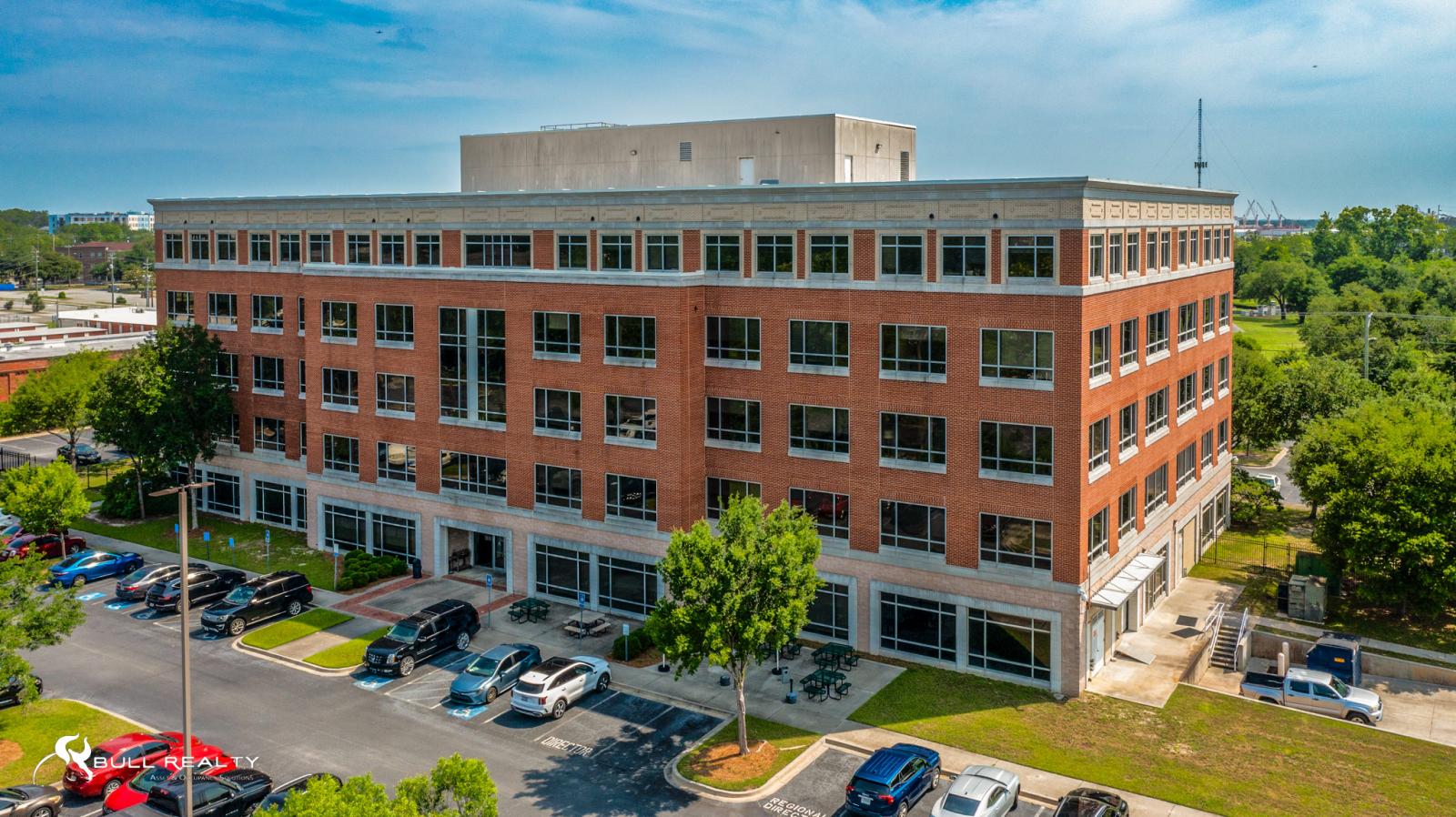
For example, we just sold this pictured five-story office building in Savannah, Georgia to a corporate user for a fraction of what they had budgeted to build. We worked with the existing single tenant to right size so the buyer could occupy half the building. When the market is disjointed, it’s time to benefit from creative solutions.
The Next Big Arbitrage: Office Condo Conversions
For investors, developers, and brokers looking for creative alpha, the time has come to look at office condominium conversions.
Because large office buildings are trading at structural discounts—sometimes as low as $150 or less per square foot—there is a dramatic valuation difference right now between larger office properties with vacancy and small owner-occupant office values. Small business owners, medical groups, and private businesses are consistently paying $400/SF or more to own their office condo.
By acquiring an undervalued asset at a low per-foot basis and converting the fee simple title to condominium, investors can fulfill the high demand from owner-occupant buyers while unlocking substantial arbitrage profits. It is a creative, entrepreneurial strategy whose time is now.
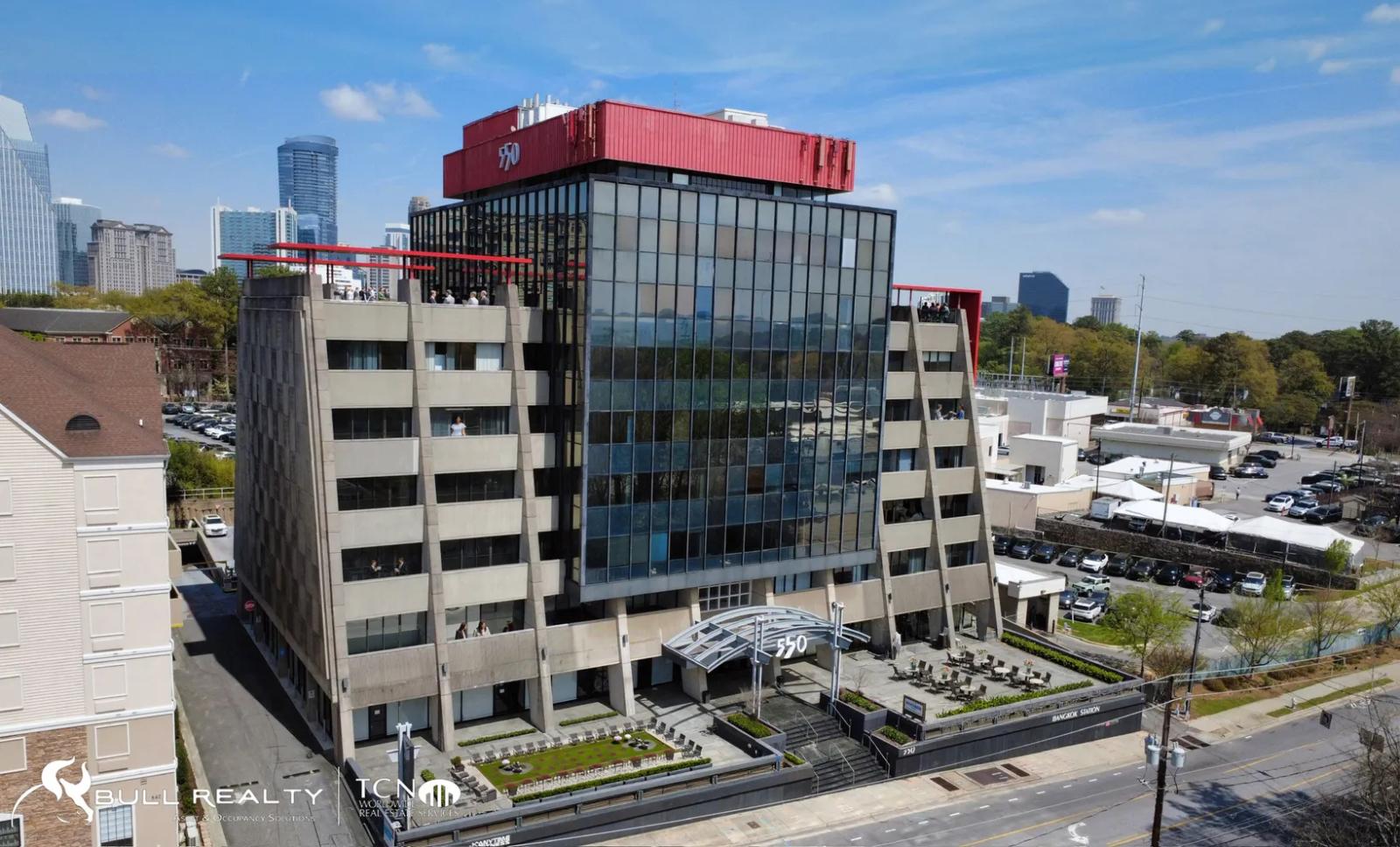
For example, the iconic 550 Pharr Road building in the Buckhead area of Atlanta may be available to acquire at only $150/SF. The suites could easily bring $400/SF as office condominiums. At just over 100,000 SF, well, you do the math.
Final Thoughts: The Buy of the Decade
Throughout my career, I’ve watched contrarian investors make absolute fortunes by running toward the fire. They bought multifamily when everyone abandoned it after the tax changes, and retail after the dot-bomb bust when pundits claimed the internet would kill brick-and-mortar stores forever.
Today, office is the contrarian buy of the decade. The market has found its baseline, the structural supply is shrinking, and the rebound is in its early innings. Just make sure you are selective, and partner with a team that knows the sector and the market. If you buy in a market with population and job growth, the timing is right.
Optimize Your Returns
Whether you are looking to buy or sell an office asset, evaluate an acquisition, or restructure a corporate lease, navigating this stabilizing market requires battle-tested strategy. At Bull Realty, we combine up-to-the-minute research, extensive regional transactional experience, and deep Southeast expertise to boost your success.
Michael Bull, CCIM
Michael@BullRealty.com
404-876-1640 x 101